Den Hartogh transports pyrolysis oil safely, efficient and compliantly across Europe.
As a specialist in liquid chemical logistics, we connect chemical recycling producers with the petrochemical crackers and refineries that transform pyrolysis oil into new raw materials. Pyrolysis oil is a challenging product to handle. It is often corrosive, temperature- sensitive and classified as dangerous goods. That’s why we provide ADR-compliant transport, dedicated tank containers, controlled tank cleaning, and complete documentation through one integrated logistics solution. With Den Hartogh, you benefit from one partner, one contract and one trusted European network from producer to processing plant.
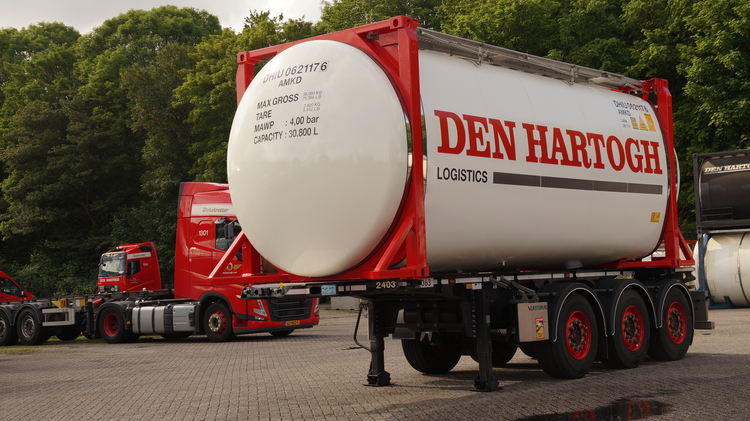
Pyrolysis oil is a circular feedstock produced by heating waste materials in the absence of oxygen. It plays an increasingly important role in Europe’s transition towards a circular economy.
Plastic pyrolysis oil
Produced from mixed, contaminated and non-recyclable plastic waste streams, including polyolefins and polystyrene. Plastic pyrolysis oil is a key enabler of chemical recycling, also known as advanced recycling.
Tyre pyrolysis oil (TPO)
Produced from end-of-life tyres. While traditionally used as a fuel component, tyre pyrolysis oil is increasingly being upgraded for higher-value industrial and petrochemical applications.
Closing the loop
Pyrolysis oil can serve as a drop-in alternative to fossil naphtha in steam crackers. Through chemical recycling and mass-balance certification schemes such as ISCC PLUS, waste plastics can be converted back into circular ethylene, propylene and new plastics with virgin-grade quality.
In short, pyrolysis oil transforms hard-to-recycle waste into valuable feedstock for the next generation of circular materials.
The chemical recycling industry is expanding rapidly across Europe, driven by regulatory requirements, sustainability targets and significant industry investment.
Transporting pyrolysis oil requires specialist expertise, equipment and operational controls.
Many pyrolysis oil grades are classified as dangerous goods under ADR regulations, often as corrosive liquids. We verify product classification against the Safety Data Sheet (SDS) and ensure full regulatory compliance throughout the supply chain.
Due to its acidic characteristics, pyrolysis oil can damage standard tank equipment. We select tanks with the appropriate coatings, linings or acid-resistant stainless-steel specifications to protect both cargo and equipment.
When destined for crackers and refineries, feedstock quality is critical. Controlled cleaning procedures, dedicated equipment and strict product segregation minimise contamination risks.
Pyrolysis oil is best kept moving. Our logistics planning minimises dwell times and ensures appropriate storage conditions whenever interim storage is required.
Cross-border transport of dangerous goods requires complete and accurate documentation. Our teams manage the full compliance process, reducing delays and administrative burden.
The tank makes the difference. ISO tank containers are classified by T codes that define pressure rating, design and chemical compatibility, and corrosive or hazardous liquids require a heavier specification. From our fleet of more than 25,000 tank containers, we select the equipment around the product and the route, not the other way around, and we clean and prepare every tank to the standard the cargo requires.
As production volumes can fluctuate significantly during ramp-up phases, Tank containers offer flexibility and reliability: door-to-door and intermodal transport with no fixed infrastructure to build, and capacity that scales up and down with your volumes. As your pyrolysis oil flows grow, our network and fleet grow with you.
Safety is the foundation of everything we do, and our protocols exceed legal requirements. We run a dedicated training institute with courses for both operational and office staff. Every operational employee handling liquid chemicals is licensed, and our teams include dangerous goods safety advisors and field supervisors who carry out regular inspections and spot checks.
Moving pyrolysis oil is a natural extension of our expertise in liquid chemical logistics and Den Hartogh is active in the European regions where chemical recycling is scaling.
The strength behind everything is our European network: our own locations and tank fleet combined with a long-term partner network of depots, terminals and hauliers across the continent. It gives you one partner, one contract and consistent Den Hartogh standards from the pyrolysis plant to the cracker or refinery, wherever they are in Europe.
The Den Hartogh advantage:
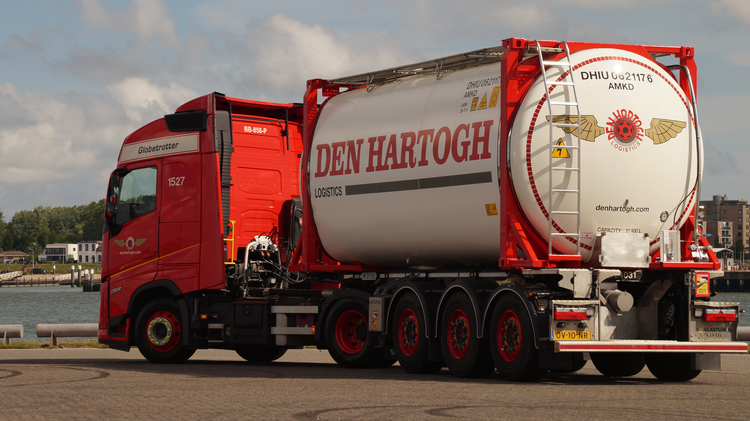
Den Hartogh sits in the middle of the circular economy for plastics. On one side are the pyrolysis producers turning waste into oil. On the other are the petrochemical crackers and refineries turning that oil back into new material. Between them sits the logistics, and that is our role.
We collect pyrolysis oil at the production site, move it in the right tank container, manage the dangerous goods requirements, keep it clean and in specification, and deliver it to the off-taker ready to use. One partner manages transport, storage, heating, cleaning and documentation across the chain, so producers and off-takers can focus on scaling chemical recycling rather than on coordinating logistics.

Every tonne of pyrolysis oil delivered to a cracker represents waste that is given a second life as new raw material rather than being incinerated or sent to landfill. By transporting pyrolysis oil safely, efficiently and in full compliance across Europe, Den Hartogh helps connect waste streams with the petrochemical industry, enabling the production of certified circular materials. With our specialist liquid chemical expertise, extensive tank container fleet and pan-European network, we help customers accelerate circularity while supporting their recycled content and decarbonisation ambitions.
Can you transport pyrolysis oil as dangerous goods?
Yes. Pyrolysis oil is typically classified under ADR as a corrosive liquid, and we transport it with ADR-certified equipment and licensed operators. We always verify the exact classification against the product safety data sheet, because it can vary between streams.
Do you have tanks suitable for corrosive, temperature-sensitive oil?
Yes. We use tank containers with the right acid-proof or coated specification, combined with heating and insulation, so the product stays in specification and the equipment stays safe. We select the tank around the product and the route.
Can you connect our plant to a cracker or refinery elsewhere in Europe?
Yes. Our European network of owned assets and trusted partners lets us move pyrolysis oil from producer to off-taker across the continent, with one point of contact and consistent standards.
How do you prevent contamination of cracker feedstock?
Through controlled tank cleaning and strict product separation, so the feedstock arrives clean and in specification, ready for co-processing.
Do you handle both plastic pyrolysis oil and tyre pyrolysis oil?
Yes. We handle liquid chemical cargoes across a wide range of properties. We match the equipment and handling to the specific product and its safety data sheet.
Can you store pyrolysis oil between production and delivery?
Yes. We offer buffer and interim storage and plan flows to keep dwell times short, because pyrolysis oil is best kept moving.
Can you meet high-integrity loading requirements?
Yes. We handle bottom loading, dry-break and dry-disconnect couplings, loading under a nitrogen blanket and overfill protection on the tank container, matched to the loading site and the product.
Can you provide dedicated equipment and round trips?
Yes. Where a flow needs it, we run dedicated, correctly specified tanks on fixed round trips, and because tank containers need no fixed infrastructure, we scale capacity up and down as your volumes fluctuate.
What makes Den Hartogh different for this cargo?
The combination of deep liquid chemical expertise, the right heated and coated equipment, a safety culture that exceeds legal requirements, and one European network that connects the full circular chain under a single contract.
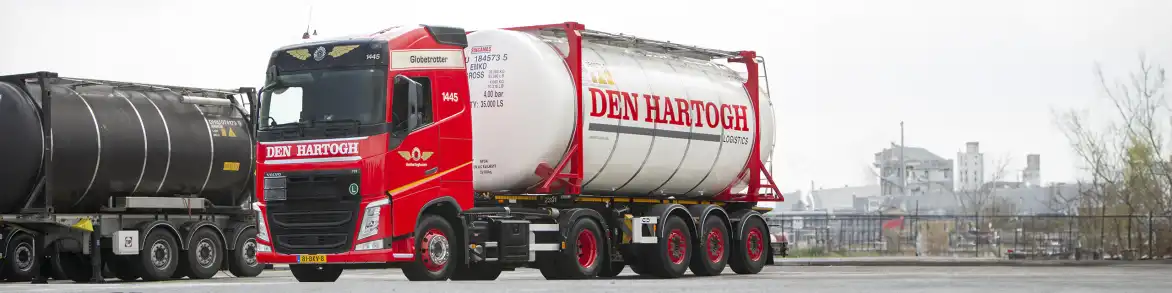

Intermodal transport is the preferred way to move freight over longer distances.
It optimally combines various modes of tank container transport.
This method has proven to be a safe, cost-effective, flexible and sustainable way to ensure that shipments are efficiently carried to their destinations.

Owning over 900 trucks, we can provide both regional as well as international transport.
So no matter where your products need to go, we’ll make sure they get there.
Every year, the fleet is expanded with dozens of high-standard new trucks, which are then provided with annual functionality updates by Den Hartogh’s dedicated M&R department.