Demurrage piling up at the quay. Heating capacity unavailable when you need it. Multiple operators, multiple invoices and limited visibility across your import chain. Den Hartogh's Import Distribution Service brings your deep-sea liquid bulk chemical imports and European distribution together under one accountable logistics partner.
Designed for both hazardous and non-hazardous chemical products, the service combines our own tank container fleet, European transport capacity and strategically located Logistics Service Centres with a selected network of depots and logistics partners. From arrival at a European gateway to final delivery, we coordinate the agreed activities across your import chain.
One partner. One contract. One Control Tower.
Importing liquid bulk chemicals into Europe requires specialist knowledge, equipment and infrastructure. Every product and flow comes with its own operational requirements. This can include dangerous goods regulations and ADR requirements for hazardous products, specific equipment, controlled handling or heating for temperature-sensitive chemicals.
At the same time, multiple parties are often involved. Shipping lines, terminals, customs brokers, depots, heating facilities and hauliers all play a role. The more fragmented the chain becomes, the harder it is to control costs, manage disruptions and maintain operational visibility.
Den Hartogh's Import Distribution Service brings these activities together in one managed setup, tailored to your products, import gateways and end-customer requirements. We coordinate the import chain from port to plant, giving your team one accountable logistics partner and central oversight of your managed import flows.
Geopolitical events, port congestion and disruption to major maritime routes are affecting lead times and planning assumptions. Importers increasingly need alternative gateways, suitable chemical logistics infrastructure and routing options to maintain supply chain continuity. For chemical products, switching between ports, depots or transport providers is not always straightforward. Product characteristics, equipment requirements and applicable regulations must all be considered.
High energy and production costs continue to put pressure on European chemical production, while production capacity expands in other regions. According to Cefic, EU chemical imports rose 10.2% year on year in early 2025, with China becoming the largest single source. Longer intercontinental supply chains create more handovers, more dependencies and greater exposure to operational disruption.
A delay in the import chain can quickly affect production and customer deliveries. For chemical products with specific handling, equipment or temperature requirements, finding an alternative depot, heating facility or transport solution at short notice can be difficult. Resilience and supply chain reliability are therefore increasingly becoming measurable procurement and business priorities.
Chemical importers face recurring challenges:
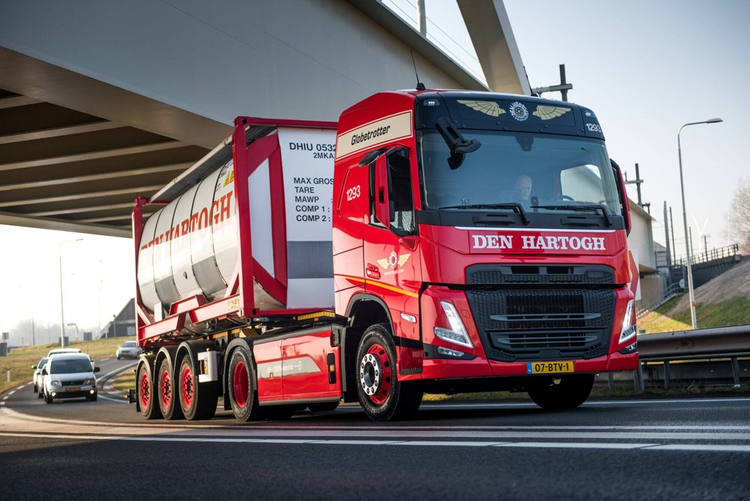
Our own tank container fleet, European road fleet and strategically located Logistics Service Centres form the operational backbone of the Import Distribution Service. At our own LSCs and depots, we manage key logistics activities including tank container handling, storage, heating and onward transport coordination, depending on location and product requirements.
This gives us greater control over equipment availability, operational capacity and safety standards at critical points in the import chain. Where additional geographical coverage or capacity is required, our own infrastructure is complemented by a long-term network of selected depots, terminals and transport partners across Europe.
Our own infrastructure provides control. Our European network provides flexibility.
Liquid bulk chemical logistics is not a one-size-fits-all operation. Non-hazardous products may require dedicated equipment, product-specific handling or controlled temperatures. Hazardous and ADR-classified products add further regulatory, safety and operational requirements.
Our equipment, infrastructure and operational expertise allow us to manage both hazardous and non-hazardous chemical flows. Product characteristics and operational requirements are considered from the start when designing the import setup. This can include:
Port handling, customs, tank container transport, storage, heating and final delivery are brought together in one managed setup. Instead of coordinating multiple logistics providers yourself, Den Hartogh manages the agreed activities across the import chain. Our own assets and Logistics Service Centres provide control at critical points in the operation, while our European partner network adds geographical reach and additional capacity.
The Control Tower provides one central overview of your incoming tank containers, including operational status and cost visibility across the managed import chain. Quay rentals and demurrage exposure are actively monitored, allowing operational action to be taken before unnecessary costs accumulate. Your team has one operational point of contact and one central view of the managed import flow.
Buffer capacity for short- and long-term storage, delivery on call-off with short lead times, and multi-port entry across Europe allow the setup to adapt to changing volumes and demand. You can align deliveries with actual demand instead of fixed delivery volumes. With an established network already in place, alternative capacity and routing options can be assessed more quickly when requirements change.
The Import Distribution Service is supported by Den Hartogh's own logistics infrastructure and wider European network.
25,000+ tank containers | 900 trucks | 54 locations | 27 countries
Our strategically located Logistics Service Centres provide operational infrastructure for chemical logistics across Europe. Operating through our own locations gives Den Hartogh greater control over safety standards, operational processes and capacity at critical points in the supply chain. Depending on the location and product requirements, our LSC network supports the storage, conditioning and onward movement of liquid bulk chemical products.
With a fleet of more than 25,000+ tank containers, Den Hartogh provides specialist equipment for the transport of liquid bulk chemicals. Our equipment portfolio supports a wide range of hazardous and non-hazardous liquid chemical products, including ADR-classified cargo.
Our own European road fleet provides transport capacity across key chemical logistics corridors. This is complemented by selected transport partners and intermodal connections where additional capacity, geographical coverage or alternative transport modes are required.
Not every import flow can or should follow the same route. Our long-term network of selected depots, terminals and logistics partners extends the reach of our own infrastructure across Europe. Partners are selected based on operational requirements, product compatibility and applicable safety and compliance standards.
Import flows can be designed around a range of European gateways. The most suitable entry point depends on the product, final destination, infrastructure availability, heating requirements and current supply chain conditions. This allows alternative ports and routes to be considered when circumstances change.
A 30-minute scoping conversation is enough to explore the fit. Bring your current import setup, products and challenges, and we'll map the possibilities together.
When completing the form, select 'Other' and choose 'Import Distribution Service' as your area of interest.
What is an Import Distribution Service for liquid bulk chemicals?
It is a fully managed import service that brings the entire inbound chain, including port handling, customs, storage, heating and last-mile delivery, under one partner and one contract, with a Control Tower for real-time cost and status visibility. Den Hartogh's IDS is built around your specific chemical flows and end-customer commitments.
What makes Den Hartogh's European network different?
Den Hartogh combines its own Logistics Service Centres and tank container fleet with a curated, long-term network of partner depots, terminals and hauliers across Europe. That mix of owned infrastructure and trusted partners gives you reach, resilience and consistent standards under one contract, and it is the hardest part of the service for any competitor to replicate. The IDS is part of Den Hartogh's wider network of 54 locations across 27 countries.
Which ports does the IDS cover?
The IDS offers multi-port entry across a wide range of European gateways, with flexible routing so flows can be re-routed around disruption.
What does "one partner, one contract, one control tower" mean in practice?
You deal with a single accountable provider instead of coordinating shipping lines, terminals, customs brokers, depots and hauliers separately. One contract covers the whole import leg, and one Control Tower gives you a real-time overview of every tank container, cost and status.
How does the IDS control quay costs and demurrage?
The Control Tower monitors all incoming tank containers and manages quay rentals and demurrage proactively, stopping costs before they accumulate. Heating costs are agreed per product up front, so pricing is predictable
Can heated, temperature-sensitive and ADR products be handled?
Yes. The service is chemistry-native: ADR and non-ADR products are both covered, and temperature-sensitive products are heated via steam, warm water or electric capacity. Cleaning, dangerous goods handling and compliance are built in.
How long does onboarding take?
Onboarding length depends on flow complexity and IT-integration scope. A 30-minute scoping conversation is enough for both sides to gauge fit and propose a realistic timeline. Where there is urgency, a single-lane pilot can run in parallel with the full contract and IT setup so the first shipments start sooner.
Can the service scale for seasonal demand peaks and buffer stock?
Yes. Buffer capacity supports short- and long-term storage, delivery on call-off handles demand variability, and an own fleet backed by trusted subcontractors provides year-round availability that scales with volume swings.

Intermodal transport is the preferred way to move freight over longer distances.
It optimally combines various modes of tank container transport.
This method has proven to be a safe, cost-effective, flexible and sustainable way to ensure that shipments are efficiently carried to their destinations.

Owning over 900 trucks, we can provide both regional as well as international transport.
So no matter where your products need to go, we’ll make sure they get there.
Every year, the fleet is expanded with dozens of high-standard new trucks, which are then provided with annual functionality updates by Den Hartogh’s dedicated M&R department.