Den Hartogh is building the logistics chain for sustainable aviation fuel. As a specialist in liquid chemical logistics, we already move the raw materials that SAF is made from, such as used cooking oil, esters and fatty acids. We manage, store, heat, transport and deliver them across Europe and around the world. Our ambition is to be the top logistics service provider (LSP) for the full supply chain, from feedstock to finished fuel, with JIG-compliant tank containers, airport delivery experience, detailed carbon data and one trusted global network. One partner, one supply chain, so producers can focus on producing.
Sustainable aviation fuel is jet fuel that significantly lowers the carbon footprint compared to fossil kerosene. The most mature production pathway is HEFA, which stands for hydroprocessed esters and fatty acids. It turns waste oils and fats into high-grade aviation fuel, and today virtually all operational SAF production worldwide runs on this route.
The key raw materials are second-generation waste streams: used cooking oil, animal fats such as tallow, and fatty acids. A closely related product, HVO, is made from similar feedstocks. These materials are temperature sensitive, often need to be transported heated, and their quality and traceability are critical for certification. In other words, they behave exactly like the chemical-bulk cargoes we have moved for decades.
Demand for SAF is not a forecast, it is law. Mandates around the world require a rising share of SAF in aviation fuel, with Europe leading through the ReFuelEU Aviation mandate and comparable targets emerging in markets such as the United States, Japan and others. The European schedule gives the clearest picture:
| Year | SAF share required (EU) |
|---|---|
| 2025 | 2 percent |
| 2030 | 6 percent |
| 2035 | 20 percent |
| 2050 | up to 70 percent |
This creates a guaranteed, growing demand, and with it a growing need to move feedstock and finished fuel reliably. What makes it complex is the raw material: used cooking oil and fats are collected in small and large quantities all over the world, in different grades and qualities, and increasingly sourced across borders. That makes the sourcing fragmented and the logistics demanding, and it is exactly what a specialist partner is built to organise.
Moving SAF and its feedstocks is not a standard job. It combines several demands in one chain.
Used cooking oil, esters and fatty acids are temperature sensitive and solidify at ambient temperature. So they need heated and insulated tanks and careful temperature control from loading to discharge. This is the core chemical-bulk expertise Den Hartogh offers.
Feedstock collection and SAF production are dispersed, and volumes swing sharply while projects scale up. Tank containers give door-to-door and intermodal transport with no fixed infrastructure to build, and scale up and down with your volumes.
SAF feedstock must be traceable and certified. Contamination has to be prevented through controlled tank cleaning and strict product separation, so the material arrives clean and in specification.
Delivering finished fuel toward airports demands JIG compliance, the quality standard for aviation fuel, and experience with the airport environment. We have built that experience through years of airport de-icer deliveries.
The demand is guaranteed and rises step by step. That calls for a partner who scales with you and is ready to invest in the chain.
The tank makes the difference. Our fleet of more than 25,000 tank containers includes JIG-compliant, heated and insulated units suited to SAF feedstocks and finished fuel. We select the equipment around the product and the route, clean and prepare every tank to the standard the cargo requires, and can move volumes by tank container, and larger flows by the modes the supply chain needs.
This is not a new world for us. Den Hartogh entered the SAF value chain as it began to mirror the chemical bulk logistics environment we know inside out and operate in every day. We already transport used cooking oil, esters, fatty acids and other intermediates with the precision, safety, heating capability and multimodal flexibility that producers depend on. Building the rest of the chain, up to the finished fuel, is the natural next step, and one our board fully backs.
Note: Den Hartogh does not transport road fuels such as diesel or gasoline. Our focus is SAF and the raw materials it is made from.
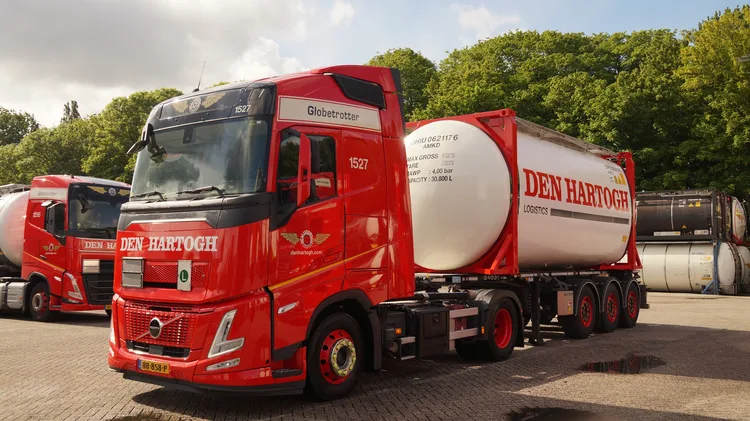
For SAF, the carbon value of the entire supply chain determines the value of the end product, and the emissions of moving the feedstock count toward it. Den Hartogh helps you keep that number low and provable. We can supply detailed emissions data for your flows, and we offer lower-carbon transport options, including running on renewable fuels such as HVO. That turns logistics into part of your sustainability story and protects the carbon value that buyers of SAF are paying for. Den Hartogh is not a certification body, but we support your scheme, such as ISCC, with reliable transport documentation and the data your mass-balance accounting needs.
For SAF, the carbon of the supply chain is not a side issue, it is part of the product you sell, so every reduction you can prove adds value.
At the heart of this is our Book and Claim service. In the real world it is not always possible to run renewable, lower-carbon transport on the exact lane your shipment travels. Book and Claim solves that: Den Hartogh deploys the renewable transport, such as HVO, elsewhere in our network, and the verified emissions reduction is booked and claimed against your flow. So instead of the reduction being stranded on a lane you cannot access, it reaches your carbon accounting.
What makes this credible is that it is not a loose offset, our system is third-party verified by an SFC approved auditor. The Science Based Targets initiative (SBTi) in its latest Corporate Net Zero Standard, introduces book & claim as a credible mechanism for reducing transport emissions. For a SAF producer whose value depends on a low, defensible chain-of-custody carbon figure, that is a real competitive edge, and it is a service few logistics partners can offer in the food and chemical bulk sector.
A large share of SAF feedstock is imported, and the import leg is often the hardest part of the chain. Through our European Import Distribution Service we manage it end to end: one partner, one contract and one Control Tower for port handling, customs, inspections, storage, heating and last-mile delivery, so your imported feedstock arrives clean, in specification and on time. Read more on our Import Distribution Service page.
The strength behind everything is our network: our own locations and tank fleet combined with a long-term partner network of depots, terminals and hauliers, anchored by a strong European backbone and reaching across the globe. It gives you one partner, one contract and consistent Den Hartogh standards across the whole SAF chain.
Den Hartogh sits across the full SAF chain. On one side are the feedstocks, used cooking oil, esters and fatty acids, dispersed and needing careful, heated handling. On the other side are the producers turning them into fuel, and the airports where that fuel is used. Our role is the logistics in between and around it: we manage, store, heat, transport and deliver, so the producer can focus on producing and selling while we take care of the supply chain.
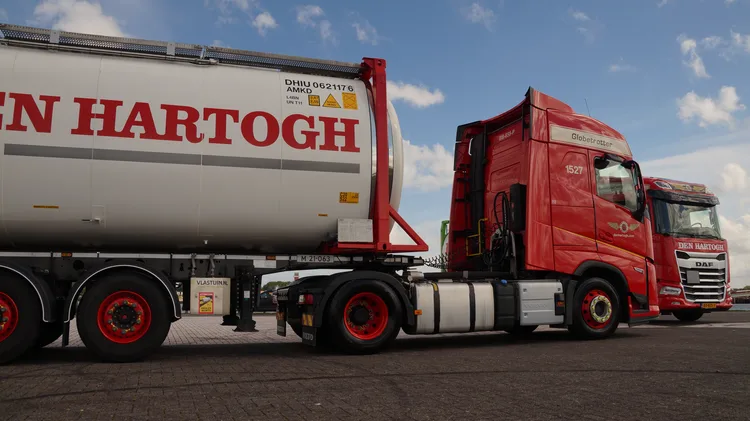
Every tonne of feedstock that reaches a SAF plant, and every tonne of SAF that reaches an aircraft, replaces fossil fuel and cuts emissions. By moving those flows safely, cleanly and efficiently around the world, Den Hartogh helps the aviation and fuel industry meet mandates such as ReFuelEU and its climate goals. Building the SAF chain is a natural extension of our liquid chemical expertise and of our commitment to environmental sustainability.
Talk to our specialists about moving your feedstocks and finished fuel across Europe and worldwide, from raw material to aircraft.
Do you already transport SAF feedstocks?
Yes. We already move used cooking oil, esters, fatty acids and related intermediates as heated, temperature-controlled chemical-bulk cargo, and we are building the full chain up to the finished fuel.
Do you have JIG-compliant equipment?
Yes. Our fleet includes JIG-compliant tank containers suited to aviation fuel and its feedstocks, and we clean and prepare every tank to the required standard.
Can you deliver toward airports?
Yes. We have built airport delivery experience through de-icer logistics and can extend that to SAF last-mile delivery.
Can you handle heated, temperature-sensitive feedstocks?
Yes. Used cooking oil and fatty acids solidify at ambient temperature, so we transport them in heated and insulated tanks with careful temperature control.
Can you provide emissions data for the transport leg?
Yes. Because the carbon value of the whole chain drives the value of SAF, we can supply detailed emissions data for your flows and offer lower-carbon transport options, including running on renewable fuels such as HVO.
What is Book and Claim, and how does it lower our carbon footprint?
Book and Claim lets you benefit from renewable, lower-carbon transport even when it cannot physically run on your exact lane. We deploy it elsewhere in our network and book the verified reduction against your flow, so it lowers your product carbon footprint. Our system is recognised by the Science Based Targets initiative (SBTi), so the claim is credible and reportable.
Can you manage imported SAF feedstock?
Yes. Through our European Import Distribution Service we handle port handling, customs, inspections, storage, heating and last-mile delivery for feedstock sourced outside the EU, under one contract.
Do you transport road fuels such as diesel or gasoline?
No. Our focus is sustainable aviation fuel and the raw materials it is made from, not road fuels.
Can you scale as our SAF volumes grow?
Yes. Tank containers need no fixed infrastructure, so we scale capacity up and down as your volumes fluctuate, and our leadership backs investment to grow with you toward the 2030 mandate.

Intermodal transport is the preferred way to move freight over longer distances.
It optimally combines various modes of tank container transport.
This method has proven to be a safe, cost-effective, flexible and sustainable way to ensure that shipments are efficiently carried to their destinations.

Owning over 900 trucks, we can provide both regional as well as international transport.
So no matter where your products need to go, we’ll make sure they get there.
Every year, the fleet is expanded with dozens of high-standard new trucks, which are then provided with annual functionality updates by Den Hartogh’s dedicated M&R department.